

Expert tips on how to have a successful locum tenens assignment
September 14, 2026
Thinking about your first locum tenens assignment? Whatever's drawing you to it—extra income, a new part of the country, more control over your schedule—a little preparation goes a long way. We asked physicians who've built full locum tenens careers with Global Medical Staffing what they wish they'd known before their first assignment.
Define what you're looking for
Before you say yes to anything, get clear on why you're doing this. Are you trying to earn extra income, cover a gap between jobs, test out a new city, or build a full-time locums career? Your answer shapes everything else: how many hours you're willing to work, whether you're open to being on call, and how far you're willing to travel.
There's no wrong answer, but knowing yours up front will help your recruiter bring you assignments that actually fit, instead of ones you have to talk yourself into.
Find a recruiter you trust
Once you know what you want, find a recruiter who's actually looking out for you. "Make sure you have a recruiter that you are comfortable communicating with, that you feel like truly is going to have your back on an assignment," says Dr. Marye McCroskey, a family medicine physician who has held licenses in more than four states plus U.S. territories. She recommends starting the search well before you need it: "Start looking a couple years ahead of time, such that when it gets closer to the time you're ready, you're hooked up with a recruiter that you're comfortable with."
Make sure you have a recruiter that you are comfortable communicating with, that you feel like truly is going to have your back on an assignment.
OB-GYN Dr. Shelley Agarwal describes a similar experience with her GMS team: "Everybody that I've encountered at Global Medical Staffing has been wonderful to work with."
Everybody that I've encountered at Global Medical Staffing has been wonderful to work with.

Dr. Shelley Agarwal in New Zealand
A good recruiter should be reachable outside business hours, not just during contracting. Ask what support looks like once you're actually on assignment: who do you call if a flight gets canceled, or if something comes up on a weekend?
Get ahead of credentialing and licensing
Credentialing is usually the slowest part of a first assignment, and it catches most new locum physicians off guard. Dr. McCroskey calls the first time through "quite an adventure”—DEA transfers, malpractice paperwork, and license applications that don't follow the same steps from one location to the next.
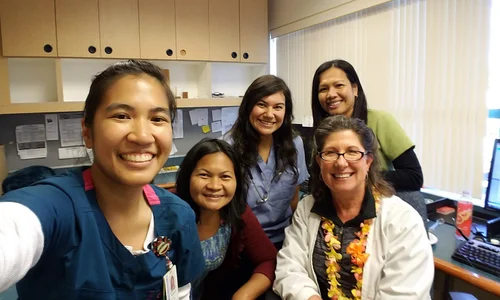
Dr. Marye McCroskey and coworkers
A good agency should be carrying most of that weight for you. "Whenever you take a new assignment, there's a lot of credentialing, and there's so much paperwork and hassle that kind of goes into it. Global Medical Staffing takes a lot of that off the physician's plate," says Dr. Elizabeth Dayton, a family medicine physician.
Whenever you take a new assignment, there's a lot of credentialing, and there's so much paperwork and hassle that kind of goes into it. Global Medical Staffing takes a lot of that off the physician's plate.

Dr. Elizabeth Dayton’s partner, Rachel, in New Zealand
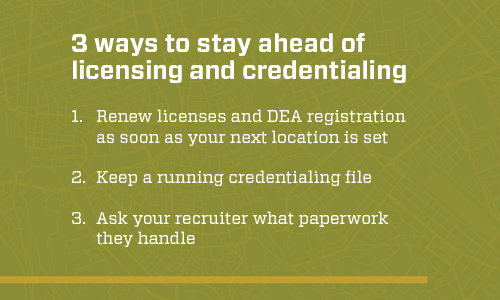
Plan ahead: How to get references for locums credentialing
Pack for the job, not just the trip
Beyond your usual travel packing, bring hard copies of your contract, licenses, and key contacts, even if everything's also saved digitally. Wifi and cell service aren't guaranteed at every facility, and having paperwork on hand can save you a scramble on day one.
It's also worth confirming ahead of time which certifications the facility requires, particularly if you’re going on an international locums assignment. BLS, ACLS, and PALS are common asks depending on specialty, but requirements vary by state, country, and by facility, so check rather than assume.
Sort out travel and family logistics
Moving for an assignment involves more moving parts than most physicians expect, especially the first time. OB-GYN Dr. Amy Thompson, who took an international assignment, says the process went smoother than she'd anticipated because her recruiter managed the sequencing: "There's a lot of paperwork that needs to be done, has to be done in a specific order, and they really took the reins on that and made sure that I stayed on deadline with what I needed to get done."
There's a lot of paperwork that needs to be done, has to be done in a specific order, and they really took the reins on that and made sure that I stayed on deadline with what I needed to get done.

Dr. Amy Thompson in New Zealand
If you're traveling with family, factor that in early. "Working locums with a family requires a lot of family flexibility," says Dr. Jason Heine, a family medicine physician who took a year-long locums assignment in New Zealand, bringing his wife and two kids. “Schooling, a partner's job, and housing all shape which assignments make sense.”
Schooling, a partner's job, and housing all shape which assignments make sense.

Dr. Jason Heine’s family in New Zealand
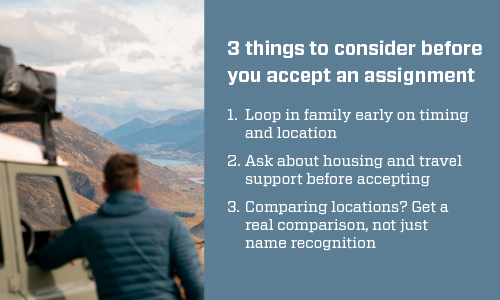
Your home-away-from-home: Where you’ll stay on a locums assignment
When you arrive
Give yourself a day or two before your start date if you can. Drive the route to the facility, walk the building, and find the essentials: your department, the ER, IT support, and where you're supposed to check in on day one. It's a small thing, but knowing your way around before your first shift takes one variable off the table.
Confirm with your recruiter that your paperwork is finalized and let your facility contact know you've arrived and where you're staying.
Onboarding
First-time locum physicians often underestimate how much happens on day one: badge, orientation, paperwork, learning a new computer system, and meeting a team you've never worked with. Facilities that have hosted locums before usually have a routine for this. If it's your first time at a given site, don't hesitate to ask what to expect before you show up.
Write down names as you meet people. It's a small courtesy that tends to make the rest of the assignment easier.
Staying connected with your recruiter throughout
The relationship doesn't stop once you accept the assignment. Dr. Thompson credits ongoing communication with making the experience work: "My recruiter is amazing. She knows exactly what I'm looking for, and she really looks for that particular job."
Dr. Brice Reynolds, a psychiatrist, planned an international move with his GMS recruiter more than a year out. "GMS was helpful and flexible. From that first call, they were with me from the ground level, trying to plan out long term," he says. "The support and logistical support and just the practical how-tos from GMS were super helpful the entire way."
The support and logistical support and just the practical how-tos from GMS were super helpful the entire way.
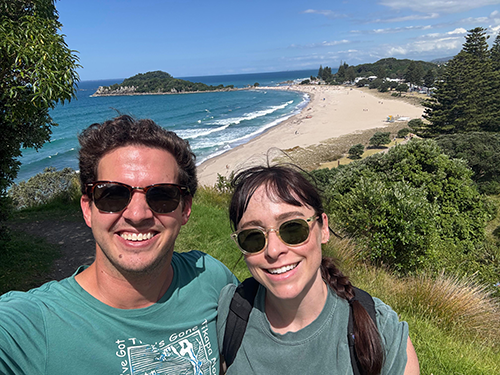
Dr. Brice Reynolds and partner in New Zealand
Wrapping up the assignment
Before you leave, make sure your timesheet is signed off, and hand off anything the next physician will need—patient status, ongoing cases, anything in progress. If you can, say goodbye to the team you worked with. It costs nothing, and it's the kind of thing people remember if you're ever back at that facility.
After your assignment is over
Let your recruiter know you're back and pass along honest feedback on what worked and what didn't. That's what helps them line up a better fit next time, whether "next time" is your second assignment or your tenth.
Ready for your first (or next) locum tenens assignment? Give us a call at 1.800.760.3174 or view today's job opportunities.