

Badass women in medicine: 7 inspiring physician stories
August 12, 2026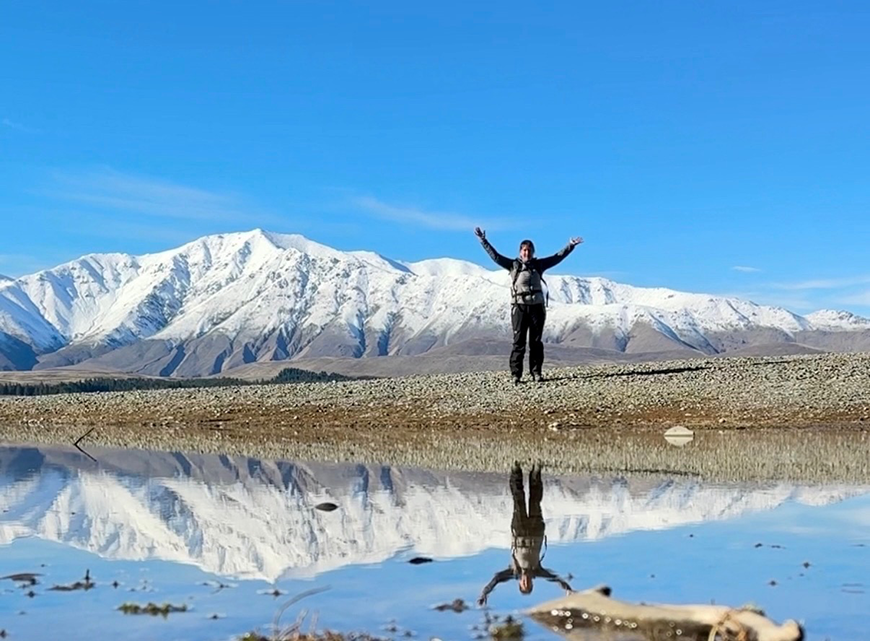
Every September, the American Medical Association marks Women in Medicine Month—a chance to recognize the growing number of women shaping the future of healthcare and the very different paths that got them there.
Not only are more women becoming physicians, but a lot of them are actually badasses! And at Global Medical Staffing, we're lucky to work with a whole lot of great women physicians. Hear the stories of some of the badass women we’ve worked with: one who's delivered babies through language barriers, another who kept practicing through a Category 4 typhoon, and another who worked in an isolated town in Alaska. Here's a spotlight on seven of our favorite badass women in medicine.
Dr. Rachael Consoli, OB-GYN
Ever since Dr. Rachael Consoli was a little girl, she wanted to be an OB-GYN.
“In my fourth-grade autobiography, I said, ‘I want to grow up and be an OB-GYN and deliver babies,’” she recalls.
However, Dr. Consoli's journey to her dream job was more circuitous. She did go to medical school but chose emergency medicine for her residency instead. After a decade of working in the ER, Dr. Consoli decided to pursue her heart's passion of delivering babies and helping women.
“My career path has been anything but normal, which is a great thing because I hate normal,” she says. “I finished residency and then became board-certified, and then I did another residency and became board-certified. I was one of the youngest kids in my graduating medical school class, and I was the youngest resident in my first residency. Then, when I went back 10 years later, I was the oldest resident, the oldest everything.”
After her second residency, Dr. Consoli combined her medical knowledge with two of her other childhood passions: traveling and humanitarian work. She has since traveled extensively around the world, including serving on multiple humanitarian missions. She has even delivered babies on every continent except Antarctica.
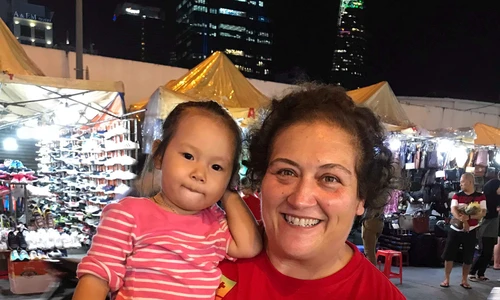
Being able to go around the world has been the greatest fulfillment of my personal and professional life.
"I love to travel, and I love to meet new people, and especially see new cultures. I really enjoy learning about different birthing practices and how it has worked for them for thousands of years.”
That's why working locum tenens assignments is the perfect fit for Dr. Consoli and why we consider her one of our badass women in medicine.
Locums helps me as a physician to learn new practices, new ways of doing things, but more importantly, to connect with and be able to serve new people.”
Dr. Samantha Conroy, family medicine
Dr. Samantha Conroy not only loves to travel but also has a passion for giving back. Luckily for her, locum tenens allows her to do both.
“Locums is really good for that kind of adventurous lifestyle,” she says. “It's also great because you get to see different parts of the world and parts of the country.”
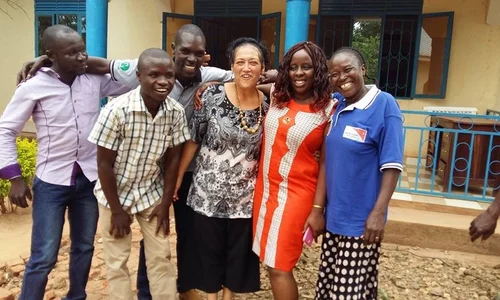
After finishing her residency in 2017, Dr. Conroy worked in Kenya for two years. Wanting to continue serving rural communities, she took her first locums assignment with the Indian Health Service in a small Alaskan town called Utqiaġvik (formerly known as Barrow).
“There are six villages they serve in that big area that are pretty much isolated communities,” Dr. Conroy shares. “They're really small, about 300–400 people, and they have a little clinic out there.”
Being so remote makes it hard for the villages to access healthcare, forcing them to rely on phone consultations with medical professionals in bigger towns. Having a physician available in the clinic makes a significant difference.
“They rely a lot on their family practice docs,” she says. “I'd deliver babies when I was up there and dealt with emergencies that would come in. It's just being comfortable dealing with whatever walks in the door, a lot of orthopedics, a lot of fractures, a lot of things like that.”
Currently, Dr. Conroy is on a locum assignment in New Zealand.
“It's a rural farming community, so it's a pretty small town,” she shares. “I really enjoy meeting the patients and getting to know them.”
If you want to become a badass in medicine, follow this advice from Dr. Conroy:
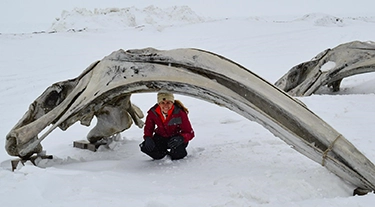
You have to be open to going places that you haven't been before. It can seem a little bit daunting to go to places like Barrow or travel overseas, but in the end, it is a really great experience, and having those experiences is what makes life interesting."
Dr. Marye McCroskey, family medicine
After 25 years working in a private practice, Dr. Marye McCroskey decided she needed a change.
“The plan was to be independent and do what we wanted to do by the time my husband and I were in our early 50s,” she recalls. “We didn't know what that would be, but we just wanted to have the freedom.”
Her first locums adventure took her to Hawaii. She liked it so much, she decided to stay there and wound up working in Maui for nearly three years. During their time there, her husband, a retired police officer, was able to pursue one of his passions—scuba diving.
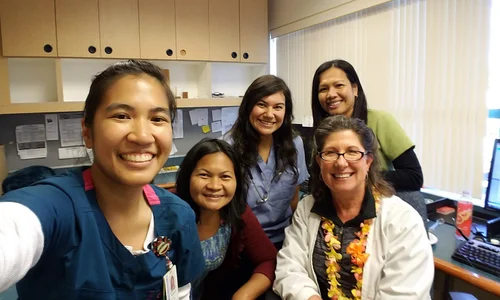
“He got a job with one of the local dive shops and took people scuba diving and did some teaching while we were there,” Dr. McCroskey says. “It was a wonderful experience.”
The couple was also able to take advantage of the travel opportunities, exploring all the Hawaiian Islands.
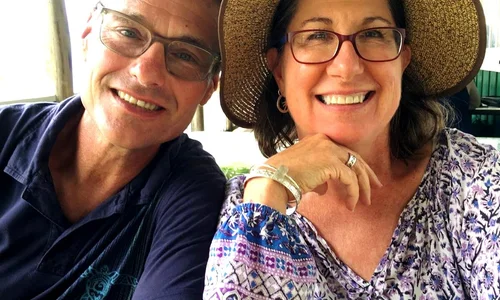
We got a chance to spend some time on each one because of the flexibility in my schedule.
From Hawaii, the couple moved to the Virgin Islands, where Dr. McCroskey's locums assignment ultimately evolved into a longer independent contractor opportunity.
“We wanted to experience these different places, really work and live in those environments, and feel like we were a part of the community, so we decided to stay on for a full year,” she shares.
But the couple's ultimate goal was to settle down in the Florida Keys, something they can now do thanks to a job Dr. McCroskey found through the American Academy of Family Physicians.
“We really want to stay in a coastal community, so my husband can do his scuba diving,” she says. “We learned living on Maui and in the Virgin Islands that we're very comfortable living on an island.”
Seeking the island life? Learn about locums in the Caribbean
Dr. Sue Ming, neurology
After 26 years on faculty at Rutgers New Jersey Medical School, Dr. Sue Ming retired from academic medicine and went looking for her next chapter. She found it with Global Medical Staffing, and for the past three years, she's split her time between domestic assignments in places like Washington State, South Dakota, and Montana and international ones in Guam and New Zealand, treating both adult and pediatric neurology patients.
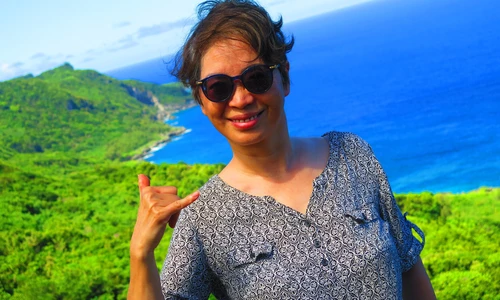
Being retired and wanting to travel, I find that being a locum allows me to provide care to different populations from a new perspective. It's something that enriches me—my experience and my insight in healthcare.
Dr. Ming has a particular pull toward underserved communities—the Chamorro population in Guam, the Iñupiat in Utqiaġvik (Barrow), Alaska, where specialists are scarce, and patients often go without preventive care until a condition is advanced.
“I feel like I was needed. I gave them something that helped them,” she says.
That commitment was put to the test in May 2023, when Typhoon Mawar—a Category 4 storm—barreled into Guam while Dr. Ming was on assignment there. She rode it out on the 11th floor of a beachfront hotel until her balcony door caved in.
“I said, okay, I can't stay here anymore,” she recalls. The hotel moved her to an empty room on the second floor. “On the 11th floor, you really feel it shaking you. This was keeping coming, right, and you don't know where it's going to end.”
When the storm passed, the harder part began. Dr. Ming spent the next week living at the hospital, which was running on generator power with no running water. The clinic flooded, so staff rolled up their sleeves to help dry out equipment. She slept on an exam table, propping a chair against it so she wouldn't roll off in the night.
“The cafeteria actually had to close—there was no food,” she says. “So we had crackers, pretzels, canned food... we ate a lot of unhealthy things, but we didn't think of eating as being a priority. There was a lot of work to do.”
The hospital became a shelter of last resort for dialysis patients who couldn't go without treatment and homeless residents with nowhere else to go. Dr. Ming was struck by how the island's sense of community held everything together—one nurse and her husband opened their home to staff and physical therapists for nearly a month.
“I never regret it. I'm going back,” she says of Guam. “People really appreciate what you do, and there's less micromanaging. I feel like we are allowed to practice medicine.”
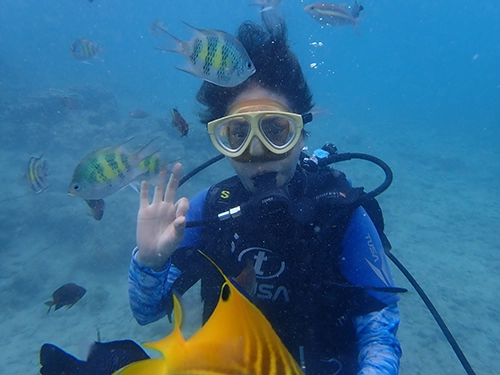
Dr. Ming is now looking ahead to her next chapter: writing about her work with military veterans, a population she says is chronically underserved for neurology and psychiatric care.
“They risk their lives for our sake, and among anyone else, they should be cared for on priority,” she says. “I think their story needs to be told.”
Dr. Shelley Agarwal, OB-GYN
When the job Dr. Shelley Agarwal took after 10 years in private practice turned out to be a bad fit, she found herself, in her words, “in a bit of a pinch.” Global Medical Staffing stepped in—first to start the process for an international assignment in New Zealand, and then, almost as an afterthought, to ask if she'd be interested in domestic work while she waited.
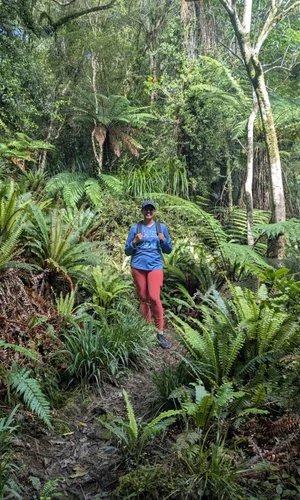
“And I said, yeah, sure, why not?” she says. “And that's how the domestic jobs have now come to fruition.”
That “why not” landed her in rural hospitals in Iowa and Louisiana—a sharp contrast to the fully staffed surgical teams she was used to in Chicago.
“I'm used to working in Chicago, where we have anesthesia MD/DO, where I often will scrub with at least a tech, if not another physician,” she says. “All of that is very different when you practice in rural, the middle of Iowa. A lot of times, the anesthesia coverage is provided by a nurse anesthetist, which means I'm also covering if there's an issue with anesthesia. A lot of times you just have to manage things on your own.”
It's a real adjustment for a surgeon, one she now makes sure to ask about up front.
“I do wish that it was more of a delineation when some of these jobs were being presented,” she says. “It is a bit of a deal breaker—I've turned down other jobs because of that.”
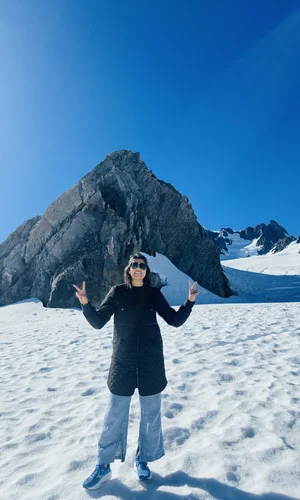
Not every part of the adjustment has been hard, though. On a recent weekend assignment in Jennings, Louisiana (population: about 5,000), the nursing staff insisted she experience the town properly.
“They convinced me to go to this place called the Gator Chateau,” she says. “I held a baby gator, which was something I never would have done in my life. And then that night I went to a rodeo.”
Through it all, she credits her Global Medical Staffing team for making the unpredictable parts feel manageable, like the night she arrived in Louisiana late and couldn't get the door code to work on her apartment.
I was like, can you just stay on the phone with me until I get into the apartment? It's 10 o'clock at night, I'm in a new place. The next morning, my recruiter sent an apologetic gift card. Just, you know, above and beyond.
Dr. Agarwal is now preparing to head to Palmerston North, New Zealand, for a six-month international assignment—with her rural domestic weekends as a reminder that a little flexibility can open doors you didn't know you wanted.
“It's definitely a nice option, and it's been pretty seamless to get a foot in the door, which has been really nice,” she says.
Dr. Amy Thompson, OB-GYN
Dr. Amy Thompson put locum tenens on her bucket list back when she was still a resident. Sixteen years into practice—and after waiting until her daughter finished high school—she finally started checking it off.
“I had an amazing recruiter who said, ‘Where would you like to go?’ I gave her my bucket list of places and within the first three years,” she says, “I was in all of my top three locations.”
Those were Alaska, Hawaii, and Maine. But her favorite by far was a five-month international assignment in Timaru, New Zealand.

“It was just unreal to be able to work internationally,” she says. “Aside from the hospital work, the land itself was like living in a fairy tale. Every place you look, it's like postcard pictures.”
Timaru also turned out to be the perfect home base for exploring the country on her days off.
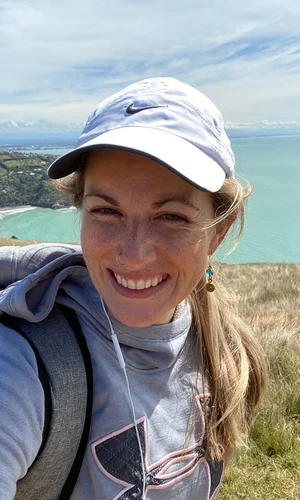
“It was two hours north to Christchurch, two hours south to Dunedin. You could be in coastal beauty, ocean views, or a mountain and in snow in a two-hour drive,” she says. “Every place I would hike, I would think, it just can't get more beautiful than this—and then I'd turn a corner, and it's more beautiful.”
She spent her free time chasing adventure: hiking, paragliding, fishing, and climbing the world's highest waterfall via ferrata. A coworker who was a member of a local running and climbing club pulled her straight into the community.
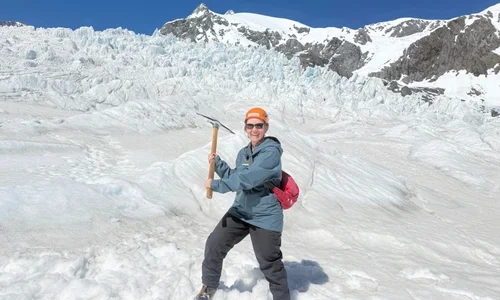
Professionally, one of her favorite parts of locum work is watching how the same specialty looks different everywhere she goes.
“You would think OB-GYN is the same everywhere. It's not,” she says. “Babies are delivered the same, but the guidelines are different, the staff you work with are different, and women's expectations, based on their culture, are different.”
Dr. Thompson's advice for physicians considering their first locums assignment: chase the place, not just the paycheck.
“If you're picking someplace just because it's the highest pay, you may not be happiest there,” she says. “Find someplace that really fits your personality, and take full advantage of learning new healthcare systems and being immersed in that culture.”
Dr. Alison Liewen, family medicine
Dr. Alison Liewen's path to family medicine ran through cancer research, a year working in rural Uganda, and clinics in Guatemala and Botswana during medical school. By residency, her focus was set: rural health, with global health woven in wherever she could.
“As I build my career, I'm looking at ways that I can stay engaged with global health issues and work as well as doing primary care here in the U.S.,” she says. “With the flexibility of locums, I can work about half the year and spend the other half volunteering my time.”
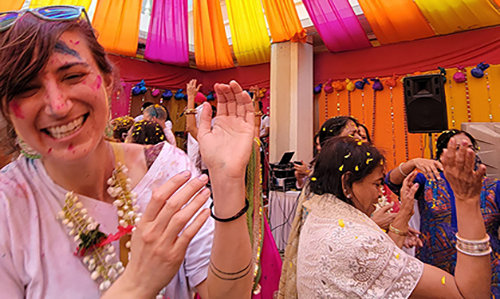
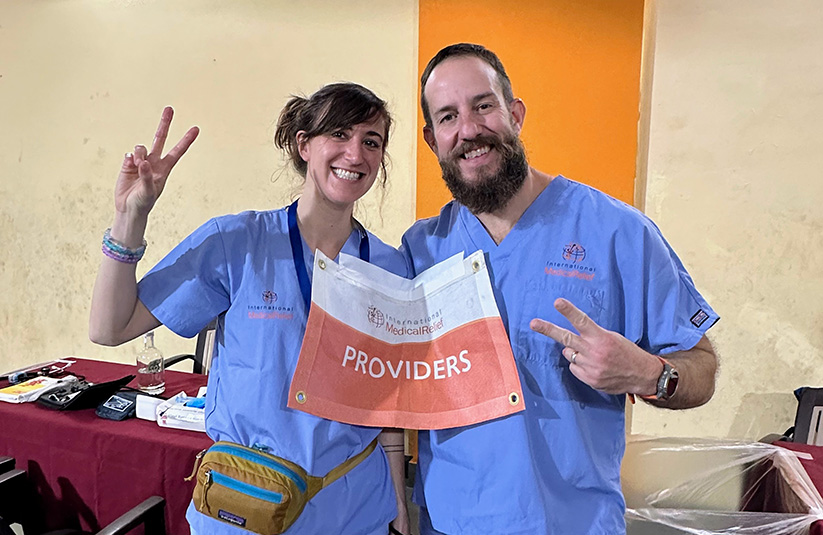
That flexibility recently took her to Mumbai, India, on a medical mission with International Medical Relief, where a small team of physicians saw more than 40 patients a day at pop-up clinics around the city. As one of the team's female providers, she saw firsthand how large the gaps in women's health education can be.
“I did a well-woman exam at my clinic here, where we talk about contraception and preventative screening,” she says. “I asked the young women who were translating for me where people go to get a Pap smear, and they said they didn’t know. Cervical cancer is the second most common cancer for women in India and it’s extremely preventable."
She also saw a steady stream of children with chronic coughs—not asthma, but a symptom of the city's air quality.
“We'd drive around, and they'd have signs: air quality is excellent today. And you're like, I can't even see the horizon,” she says.
Between clinic days, the team celebrated Holi, the festival of colors, with the local community—dancing, live music, and everyone covered head to toe in bright powder.
Dr. Liewen has also returned twice to Dillingham, Alaska, to work with the Bristol Bay Area Health Corporation, a tribal health organization that serves Dillingham and roughly two dozen smaller communities reachable only by small bush plane.
I flew out to one of the communities, Port Heiden—a really small fishing town. We fly in with one bag of medical supplies and one bag of medicine. If it's not in the bag, you can prescribe it through the EMR, and it's eventually flown out to them.
It's remote enough that a routine evening walk turned into a genuine wildlife encounter.
“I found myself at the end of the beach, turned around, and a grizzly bear was walking right toward me,” she says. “I didn't have any bear spray. I just talked calmly to it and backed away.” Days later, she helped a local community health aide check her salmon nets—and found another grizzly bear tangled in one. “She pulled the salmon out and filleted it on her tailgate. I had fresh salmon to eat that night.”
Dr. Liewen has signed on for a permanent position in Fort Collins, Colorado, but doesn't plan to give up locums or mission work entirely—she's hoping to keep a week or two open here and there.
“I love the variety of medicine and the feel of smaller towns,” she says. “I never feel burned out, and I still love medicine as much as when I started. It's a really great place to be.”
Ready to write your own badass story?
From typhoons in Guam to grizzly bears in Alaska to well-woman exams in Mumbai, these seven physicians prove there's no single way to build a career in medicine—just a lot of interesting ones.
So whether you're eyeing a domestic assignment close to home or your first international locum tenens adventure, Global Medical Staffing can help you find it. Whether that's a domestic assignment close to home or your first international locum tenens opportunity on the other side of the world, Global Medical Staffing has physician jobs to match. Search current locum tenens jobs or give us a call at 855.407.6961 to get started.